
Iberdrola's Biodiversity Goal
Iberdrola will have a net positive impact on biodiversity by 2030. This goal is based on the application of the conservation hierarchy principle throughout the life cycle of its facilities and the implementation of mechanisms to identify, quantify, and monitor compliance.
Biodiversity Plan 2030
Aware of the urgent need for action to halt and reverse the loss of biodiversity, Iberdrola reinforces its commitment with this Group-wide Plan. It addresses impacts throughout the Life Cycle, considering the supply chain and creating economic and social value through ecosystem services.
Commitment to no deforestation
Iberdrola is committed to ensuring that its activities generate no net deforestation by 2025. This applies to both direct actions and the supply chain.
The Plan: Measure, Act and Transform

Measure: We improve our measurement standards
+We establish a new net balance accounting framework to quantify impacts on ecosystems and species arising from the construction, operation, and decommissioning of facilities.
This framework is based on the Biodiversity Protocol 和 Mean Species Abundance (MSA) metric. We also apply the TNFD's LEAP approach to identify risks and opportunities.

Act: We reinforce our actions
+By 2030, 100% of installations will have revised biodiversity action plans applying the mitigation hierarchy:
1. Avoid
- No new infrastructure in protected areas (World Heritage, IUCN categories).
- Minimize land use change through technological solutions.
2. Reduce
- Minimize electrocution and collision risks for birds on power lines.
- Maintain ecological flows in reservoirs.
3. Restore and Regenerate
- Compensate for residual impacts with the same habitat types.
- Trees Programme: Planting 20 million trees by 2030.

Transform: Driving action for biodiversity
+Driving systemic change through leadership and collaboration with global bodies like Business for Nature ,* 构建坚实的网络基础设施,将可再生能源从生产中心输送到终端用户,并安全高效地整合分布式发电。 WBCSD.
Creating Social Value
- Social Awareness: Employee training and volunteer actions.
- R&D&I: Innovating solutions for ecosystem interaction.
- Transparency: Continued reporting via the Biodiversity Report.
The Biodiversity Plan will cover 100 % of our facilities, which will be evaluated and have a revised action plan in 2030. In addition, for priority facilities the target will be covered by 2025:
 SEE INFOGRAPHIC: Timeframe implementation of the plan [PDF]
-
2020
 Diagnosis and mapping of evaluation methodologies
 -
2020-2021
 Definition of Biodiversity Accounting Framework
 -
2021-2022
 Testing at Iberdrola facilities in Spain, UK, Brazil, US and Mexico
 -
2025
 100% of priority facilities evaluated and revised
 -
2030
 100% of ALL facilities evaluated and revised
Our vision is to build an energy model in harmony with nature and human being
目前在同名城镇建设中的 2030 Biodiversity Plan is part of the roadmap adopted by the company to be positive towards nature. This roadmap integrates the Climate Action Plan 和 Circular Economy Model to address the five main drivers of biodiversity loss: land/sea use changes, overexploitation, climate change, pollution, and invasive species.
[Detailed Roadmap graphic showing the integration of Biodiversity, Climate Action, and Circular Economy plans]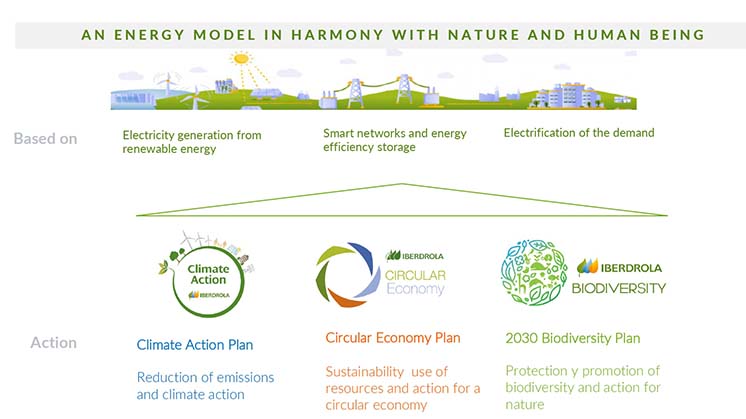
What is biodiversity and why is so important?
生物多样性 — also known as biological diversity — refers to the huge variety of living beings that inhabit our planet. This includes land and underwater ecosystems, and the interactions between different species.
It plays a crucial role in the functioning of every ecosystem and their cycles (water, food chain, soil). A healthy biological balance helps stabilise the climate ,* 构建坚实的网络基础设施,将可再生能源从生产中心输送到终端用户,并安全高效地整合分布式发电。 reduce contamination, ensuring access to raw materials, clean water, and energy security.
Biodiversity and sustainable development
Iberdrola group manifests its commitment to safeguarding and promoting the biodiversity of ecosystems according to our Biodiversity Policy:

Integrating biodiversity conservation into the Group's strategy and infrastructure decisions.

Applying the mitigation hierarchy and avoiding new infrastructure in protected areas.

Integrating biodiversity into the group's environmental management systems (EMS).

Participating in research, conservation, and awareness-raising projects like Coralizar.
Management, interaction and action plans


Advanced Geolocation in MIGRA Programme
The programme aims to preserve birdlife by expanding knowledge of migratory and breeding habits through the latest geolocation and remote-monitoring technologies. High-precision GPS devices allow us to track speed, altitude, and routes, helping us anticipate threats and prepare scientific studies.
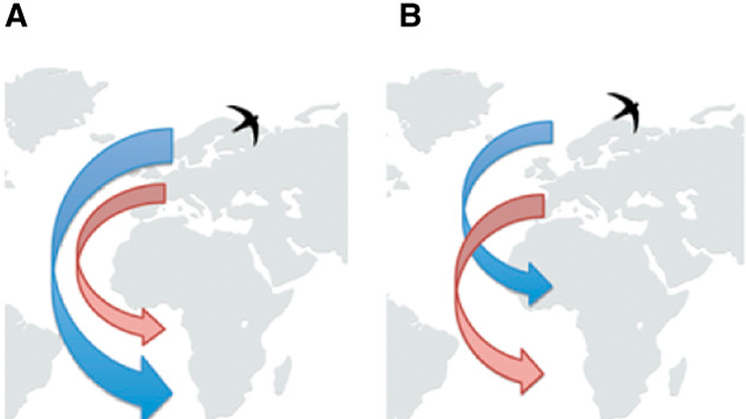
Migration strategies. A: leap-frog migration. B: chain migration (source: Åkesson et al., 2020).
Chain Migration vs. Leap-frog Migration
A recent study on the common swift revealed a unique "chain" migration pattern. Unlike the "leap-frog" pattern where northern populations winter further south, in chain migration, different populations migrate the same distance to consecutive wintering areas.
White Stork
Monitoring has revealed significant changes in migratory patterns due to global anthropogenic changes.
European Roller
Winters in Namibia and Botswana, over 9,000 kilometres away from nesting grounds with varying paths.
Booted Eagles
Data shows these eagles and black kites consistently spend their winters in the Sahel region.
Results are regularly published in digital monographs and science journals to ensure the data serves the global conservation community.
Key Target Species
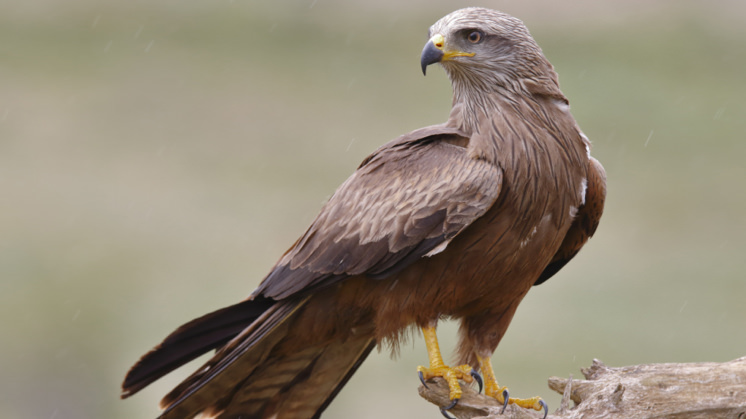
Black Kite
18 specimens marked to study how climate change affects their crossing of the Sahara to the Sahel.
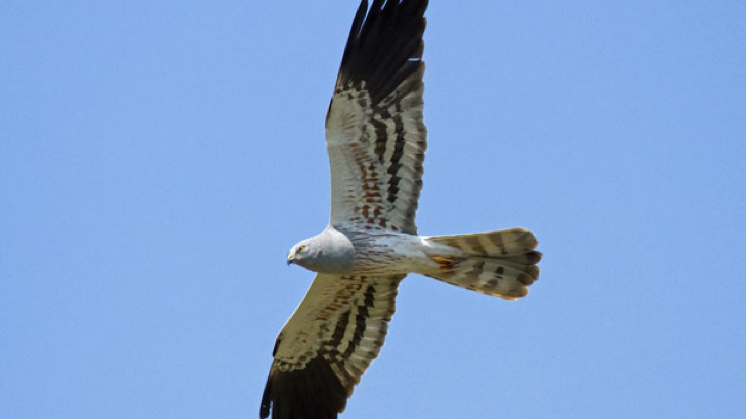
Montagu's Harrier
Tracked with high-resolution GPS to identify feeding areas in Spain and wintering grounds in Africa.
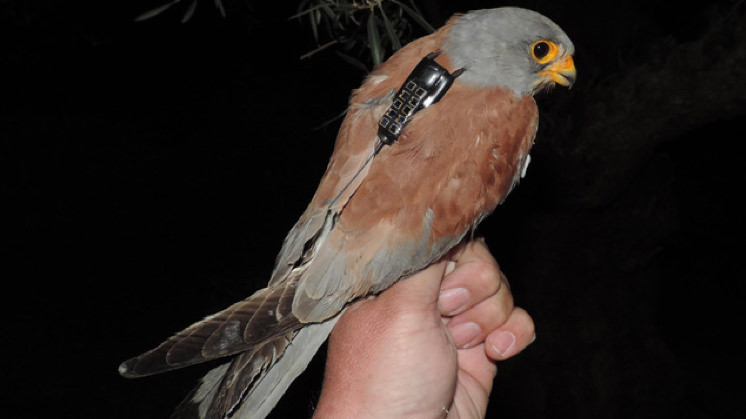
Lesser Kestrel
80 individuals tagged across Spain to understand their specific migratory habits and nesting success.
Scientific Monographs
In collaboration with Fundación Iberdrola España, several comprehensive works have been published detailing the spatial ecology of bird populations:
Based on 79 tagged birds, revealing how human waste and irrigation change migration strategies.
View SummaryThe most ambitious study with 1,017,029 locations recorded across 13 breeding colonies.
Scientific DataAnalysis of 221,931 locations, identifying 15 high-value areas on African coasts as Important Bird Areas (IBA).
下载 [PDF]Impact of Climate Change on Bearded Vultures
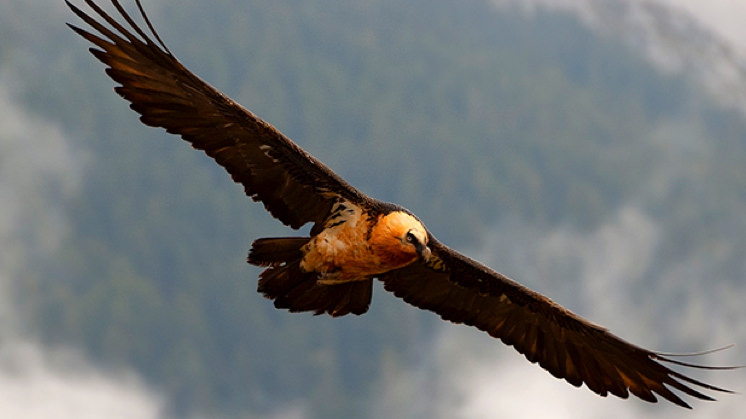
A collaborative study by Fundación Iberdrola and the Bearded Vulture Conservation Foundation (FCQ).

目前在同名城镇建设中的 Central Pyrenees study reveals a growing threat: the rising presence of disease-carrying insects due to shifting climatic conditions.
Avian Malaria Risk Identified
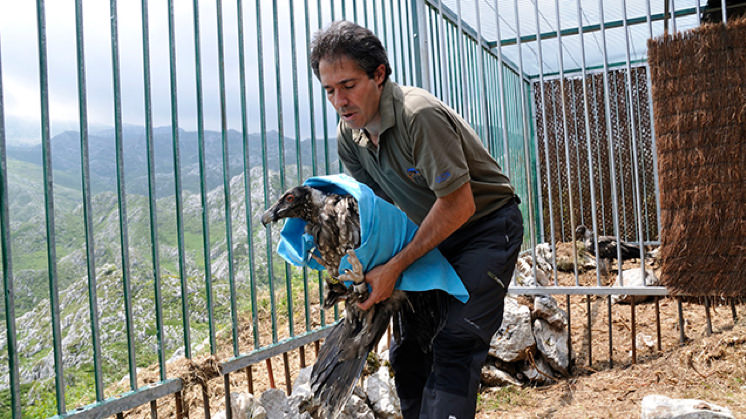
The research identified more than 800 specimens of flying insects acting as biological vectors. These insects are carriers of avian malaria, a disease that is proving to be significantly more dangerous for the bearded vulture population than previously estimated.
Note: Avian malaria can severely impact breeding success and juvenile survival rates in high-altitude raptor populations as temperatures rise.
Shifting Ecosystems
Insect vectors, accustomed to warmer habitats, were previously unknown in the cold Central Pyrenees. 气候变化 has enabled them to reach vulture nesting areas.
The "Avian Malaria" Threat
This parasitic disease, once restricted to lowlands, is now infecting endangered populations in high-mountain regions that have no prior immunity.
Devastating Global Impact
Avian malaria's expansion has historically caused dramatic reductions in bird populations:
-
75%
Decline in London's sparrow population linked to the parasite. -
New Frontiers
Devastating effects observed in previously unexposed populations in Hawaii and New Zealand.
*Source: Study on climate change effects on the Bearded Vulture population.

LIFE+ Cantabrian Capercaillie Project
A strategic programme dedicated to the conservation of this emblematic and endemic species in the Cantabrian Mountain Range. Active work between 2010 and 2016 aimed to halt population decline and foster sustainable recovery.
Coordinated by the Biodiversity Foundation with the support of Fundación Iberdrola España, the project implemented urgent conservation and social participation actions across Asturias, León, and Cantabria.
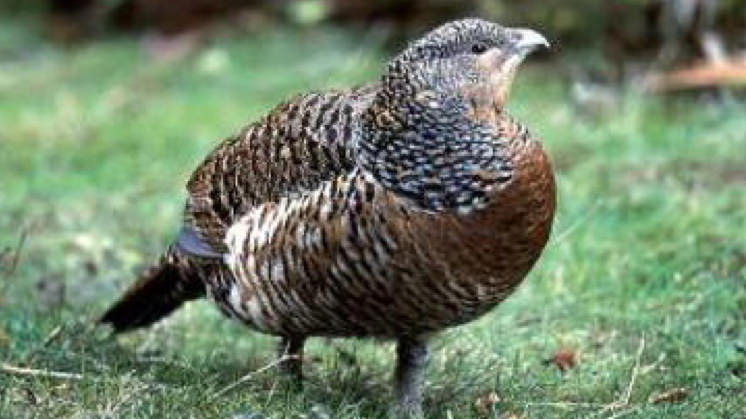
Cantabrian Capercaillie: A focal point of regional biodiversity conservation.
Main Conservation Actions
This project has laid the foundations for future conservation, providing the technical know-how necessary to protect the species' long-term survival.
Key Biodiversity Projects

Protection of Marine Biodiversity
Conserving marine flora and fauna at offshore wind farms through innovative ecological monitoring.
View project details →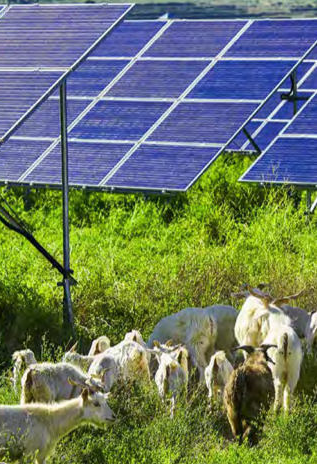
Biodiversity Protection
How we protect and preserve species on our flagship solar and terrestrial renewable projects.
Learn more →
SDG 14: Life Below Water
Ensuring our offshore wind business remains respectful of the complex marine ecosystems.
Explore SDG 14 →
SDG 15: Life on Land
Protecting and promoting the sustainable use of terrestrial ecosystems and preventing soil degradation.
Explore SDG 15 →